


Varicose veins are a disease in which they stretch and reduce the elasticity of the walls.The disease occurs as a result of disturbed outflow from the veins;most often the disease is localized in the lower extremities.This is the most common pathological condition that occurs in vascular diseases.It occurs several times more often in women than in men.
Varicose veins can appear in women with enlarged pelvic veins, in men in the form of varicocele, and in any person in the form of hemorrhoids.Pregnancy is often a provoking factor in the occurrence of this condition, because changes in blood rheology towards thickening, as well as the increased pressure of the uterus on the pelvic veins, increase venous stagnation.
The disease develops as a result of incompetence of the venous valves, changes in the vascular wall (its expansion, reduced elasticity).
How are varicose veins manifested?
This pathological process does not start completely suddenly, but initially the symptoms of varicose veins are not typical and can be attributed to ordinary fatigue.The overflowing of the veins with blood is accompanied by a feeling of heaviness in the legs, and fatigue during prolonged walking and standing develops faster than before.
In this stage, the treatment and prevention of the disease is the most effective, but many do not pay attention to it, so they usually go to the doctor in already severely advanced cases.
The formation of vascular networks in the form of "stars" or "bundles" begins to cause discomfort, because in addition to increased fatigue and the appearance of swelling, many women are also worried by the fact that the appearance of the legs becomes less aesthetic.
Blood stagnation in the vessels does not go away by itself, so the disease begins to progress.As a result, the swelling becomes more pronounced, does not disappear after assuming a horizontal position, muscle pains appear, and metabolic disorders lead to the development of leg cramps, which are especially characteristic of this disease, the skin of the legs dries out and becomes irritated.
At the same time, veins that are clearly visible under the skin begin to protrude, like blue strands, some of them change shape, become thicker and more curved.The patient is concerned about skin discoloration and itching.If phlebitis occurs, the vein swells, becomes harder, and the skin in this area becomes red.
In the case of varicose veins of the pelvis, the pain most often occurs in the lower abdomen, which is characterized by intensification when lifting heavy objects, before the start of menstruation and during sexual intercourse.All these situations lead to blood flow and increased congestion.The provoking factor for the development of varicose veins of the small pelvis is pregnancy and childbirth.
Characteristics of circulatory disorders in deep veins
Some people think that varicose veins are only a cosmetic defect that only causes problems for the fairer sex, but this is not so.The main outflow of blood from the legs to the heart passes through deep veins, so this pathology does not always manifest itself in the form of external changes.
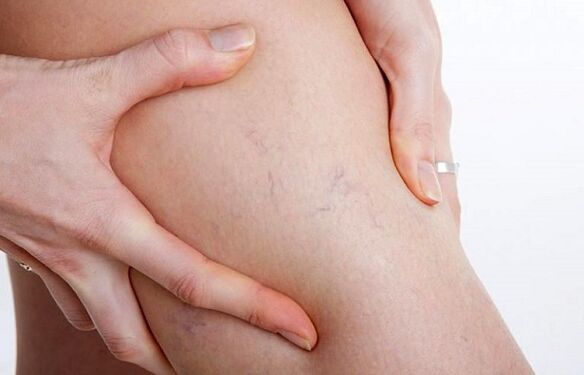
Manifestations of the disease, with the dominance of such a phenomenon as varicose veins of deep veins, do not differ from other variants of the disease - heaviness appears in the legs, swelling develops, which increases as the pathological changes progress, and later there is a change in skin color and the development of trophic ulcers in the affected area.
There are cases when varicose veins of the deep veins of the lower extremities develop secondarily, as a result of stagnation in all veins, since outflow disorders in the superficial vessels cause increased stress on the superficial vessels.
Treatment and therapy
Treatment of varicose veins can be therapeutic and surgical.In a conservative way, you can alleviate the condition if the changes in the veins are not too pronounced;for this there are venotonics, ointments and gels for local use.All this is combined with wearing compression stockings.
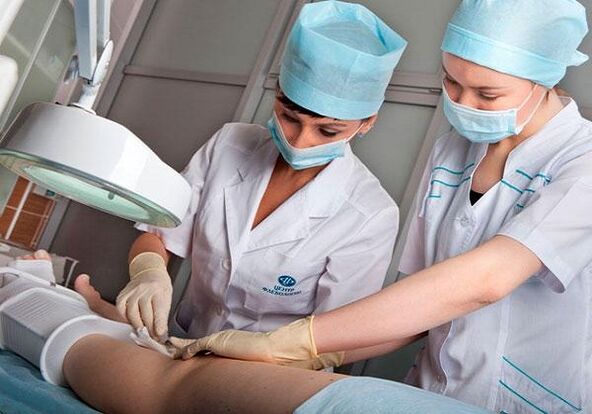
Surgical methods include many methods of radical relief of severe varicose veins.This includes phlebectomy, crossectomy and vein extraction.Among modern methods, endoscopic vein surgery is practiced.